
What Exactly is CSR?
CSR, or Corporate Social Responsibility, refers to the responsible actions a company takes towards society and the environment.
Specifically, it's a voluntary approach that involves considering the impacts of its activities on different levels.
To do this, you must continue to perform well, while having a positive impact on the world.
This involves making more ethical, sustainable, and respectful choices for people and the planet.
But for CSR initiatives in business to work, they must be driven by management and integrated into the company culture. If it remains a mere declaration of intent, it will not produce real change.
Implementing CSR initiatives also yields many benefits. These improve brand image, motivate teams, reduce energy costs, and encourage sustainable innovation.
To be effective, the objectives must be clear, achievable, and measurable over time.
It is important to track results with indicators (KPIs) to assess progress and adjust actions.
The Three Pillars of CSR
We often talk about three major pillars to describe CSR initiatives, also called the “triple bottom line”:
- The environmental pillar: this includes all actions that aim to reduce the company's ecological impact. For example, limiting CO₂ emissions, recycling waste, or using renewable energies illustrates a company's ecological commitment.
- The social pillar: this is everything related to the human dimension. This includes working conditions, the health and safety of employees, and equal opportunities.
- The economic pillar: here, the objective is to reconcile performance and responsibility. A company can be profitable while remaining transparent, ethical with its partners, and focused on sustainable innovation.
How to Talk About CSR Without Falling Into Greenwashing?
The famous greenwashing trap! Many companies communicate about CSR to improve their image, without necessarily taking action. However, talking about CSR initiatives is above all a question of transparency and sincerity.
To avoid any suspicion of greenwashing, you must remain concrete.
Forget vague slogans like “We love the planet” or “We are responsible”.
Instead, show specific and verifiable examples such as reducing your energy consumption, implementing a training program, or partnerships with local associations. These concrete actions make the difference between authentic CSR initiatives and simple marketing speech.
Figures and indicators are your best allies to give credibility to your commitment: CO₂ emissions avoided, percentage of recycled products, number of local jobs created…
Avoid vague promises or phrases that are too good to be true.
And above all, don't be afraid to recognize what remains to be improved.
Saying that you have reduced your CO2 emission but that you have not managed to have the expected results shows a real desire to progress.
This honesty inspires much more confidence than a perfect but hollow speech.
Finally, limit excessive marketing so as not to be suspected of greenwashing.
A simple, sincere message supported by facts is better than a beautiful promise without foundation.

How to Implement CSR Initiatives in Business?
CSR initiatives in business must be collective. Everyone can contribute! Creating working groups, workshops, or internal challenges helps to unite employees and give meaning to the approach.
Implementing CSR initiatives in business requires a structured and progressive approach, not a one-off action.
Initially, assess the current state of the company on the three pillars. Identify strengths and areas for improvement with tools such as the carbon footprint or internal survey.
Many companies start with a simple but visible CSR approach, then gradually expand the actions. The important thing is to start and stay consistent.
Environmental Initiatives
Reducing energy consumption is one of the simplest CSR initiatives in business. To do this, you can install LED bulbs, optimize heating or air conditioning, and turn off unused equipment.
Waste management is also a must. Sorting, composting organic waste, and recycling electronic equipment help reduce its ecological impact.
To reduce the carbon footprint, you can promote telecommuting and offset emissions through ecological projects.
Conducting CSR Workshops in Business
On the social level, it is important to listen. For this, workshops are the best way to maintain good communication. The goal is to ensure the well-being, safety, equality, diversity, and continuous training of employees. Fair recruitment policies, continuous training plans, and burnout prevention can be implemented.
In CSR workshops, dialogue must be at the heart of your approach in order to obtain real results.
CSR Initiatives of the Economic Pillar
Economic approaches are complex, but they show a real commitment. Ensure financial transparency and value your relationships with responsible suppliers (local, organic).
If your company is focused on innovation, do not hesitate to value your sustainable innovations, which are fully integrated into CSR initiatives.
Organizing a Seminar Focused on CSR
To highlight your CSR policy, you can organize a seminar dedicated to CSR.
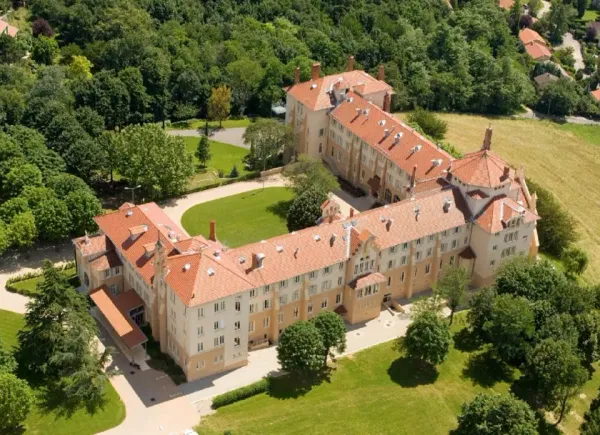
One option is to opt for a “green” seminar. An environmentally friendly event, located in a quiet setting in the heart of nature. The objective is to get away from the hustle and bustle of the city, to recharge your batteries and promote relaxation, while working on communication and team cohesion. This type of seminar allows a real disconnection, conducive to reflection and exchanges around CSR.





A CSR Seminar in the City
It is also possible to organize a CSR seminar in an urban environment. In this case, it must respect at least one of the three pillars of CSR.
For example, you can choose a place in Paris that pays particular attention to waste sorting, water recycling, or other sustainable practices.
You can also integrate CSR workshops during the day, such as awareness sessions, varied training, or collaborative activities, in order to make the seminar both informative and engaging.